What Makes a Cobot Different
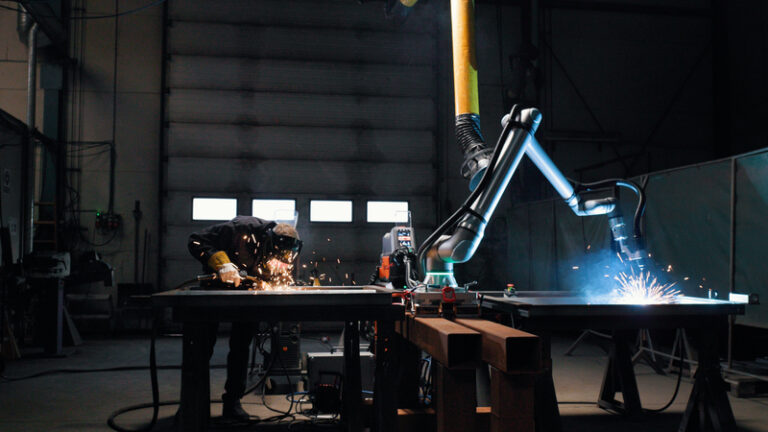
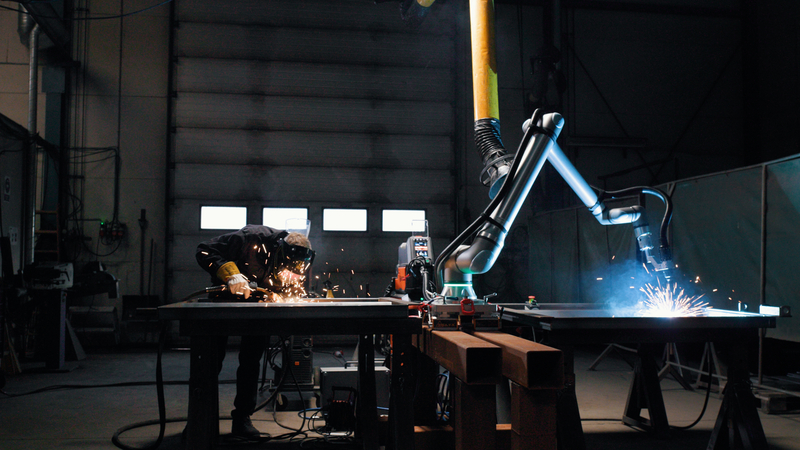
Collaborative robots are designed to work safely alongside people, without the safety cages traditional industrial robots require. They’re typically easier to programme, quicker to redeploy to a new task, and better suited to smaller batch sizes or frequently changing production runs.
Where Industrial Robots Win
Traditional industrial robots are built for speed, payload, and repetition at scale. Where a cobot might handle light assembly at a human pace, an industrial robot can move heavier loads faster and run continuously in high-volume production, usually behind safety fencing.
The Real Question to Ask
The decision usually comes down to three factors:
- Volume and speed: high-volume, repetitive tasks favour industrial robots; variable, lower-volume work favours cobots
- Space and safety: cobots can often work in tighter spaces without fencing; industrial robots typically need a dedicated cell
- Flexibility: cobots are faster to reprogram for a new task; industrial robots are usually optimised for one job at a time
Many manufacturers end up using both, cobots for flexible, people-adjacent tasks, and industrial robots for high-speed, high-volume work elsewhere on the same line. The right mix depends on your specific process, not a generic rule.
Explore our full range of Collaborative Robots and Industrial Robots, or get in touch to talk through what fits your line.